GENRE: Action, Adventure, Puzzle
PLATFORM: PS5, Xbox Series X|S, Switch 2, PC
DEVELOPER: ZDT Studio
PUBLISHER: KONAMI
RELEASE DATE: April 2026
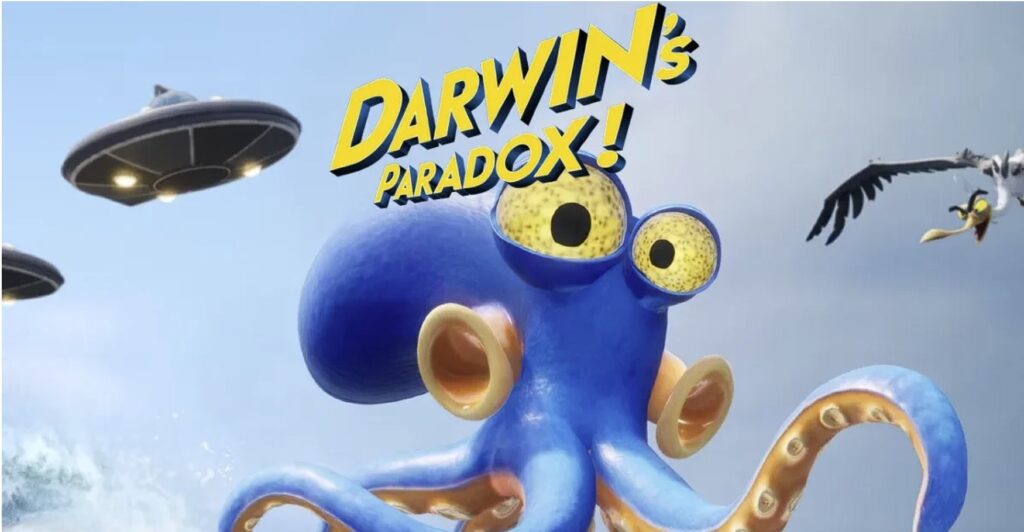
Darwin’s Paradox! is a cinematic action-adventure platformer where you play as Darwin, a clever young octopus ripped from the ocean and trapped inside a strange industrial facility. Using classic octopus skills—squeezing through tight spaces, climbing with suction cups, and blasting ink—you’ll sneak past hazards, solve environmental puzzles, and survive a world that really, really wasn’t designed for sea life.
Story overview
Darwin’s peaceful life in the deep sea is shattered when he’s suddenly pulled away and ends up in a mysterious human-made complex (a food-industry setting is heavily implied). From there, the goal becomes simple and urgent: escape the facility and make it back to the ocean—while uncovering why he was taken in the first place and what’s really going on behind the scenes. The tone mixes tension with humor and oddball characters, leaning into a “cinematic adventure” vibe rather than a long, dialogue-heavy saga.
Gameplay Mechanics (Darwin’s Paradox!)
Darwin’s Paradox! is a cinematic 2.5D puzzle-platformer with a strong emphasis on stealth, traversal, and environmental interaction. You play as Darwin, a young octopus yanked out of the ocean and dumped into a hostile industrial world, where survival is all about being clever, slippery, and quietly chaotic.
Octopus Movement and “Sticky” Traversal
Darwin’s mobility is built around natural octopus traits: using suction-cup arms to cling to surfaces, reach distant objects, and maneuver through spaces that would be impossible for a normal platforming hero with boring human bones.
Stealth, Distraction, and Camouflage Play
Instead of direct combat, the game leans into infiltration. You’ll sneak through guarded areas, deceive patrols, and use camouflage and timing to slip past threats—more “underwater ninja” than action brawler.
Ink as a Tactical Tool
Darwin can fire ink to create openings—think quick escapes, misdirection, and buying a second to reposition when things get messy. It’s a simple tool, but it supports the game’s whole “outsmart, don’t overpower” philosophy.
Environmental Puzzles and Interaction
Progress often comes from reading the environment: pulling, pushing, climbing, and using objects or mechanisms to open paths. The challenge is less about raw reflexes and more about making smart moves in a dangerous place.
A Tense Escape-Driven Structure
The level flow is designed around pushing forward through an industrial complex toward freedom, mixing puzzle platforming with stealth pressure—where one mistake can turn a clean sneak into a frantic getaway.